 NEWS
NEWS
A High-Level Round Table on the Trans-Caspian Transport Route Held at the European Parliament
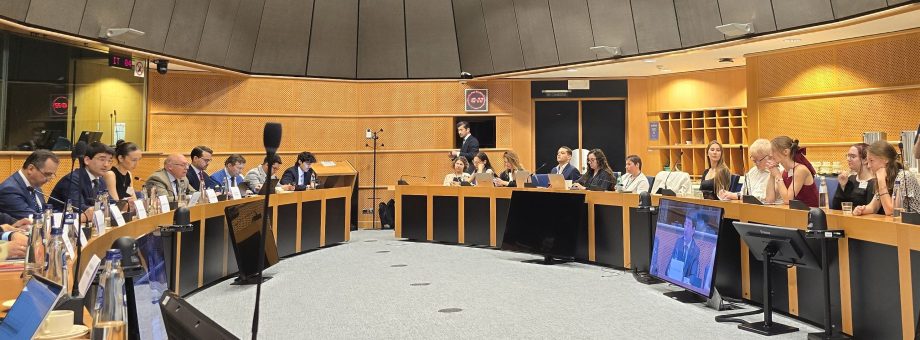
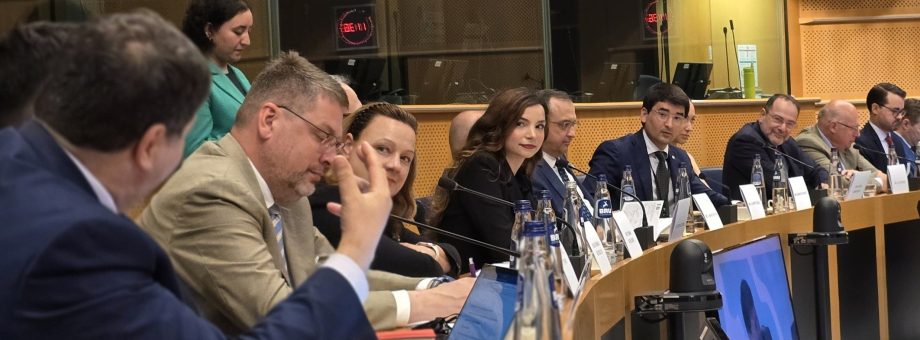
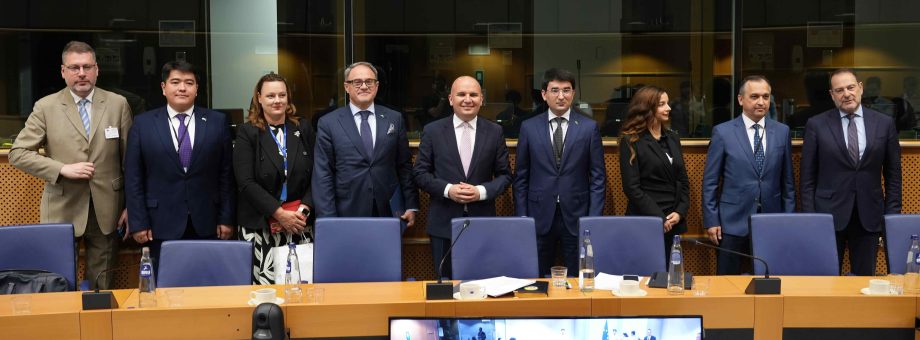
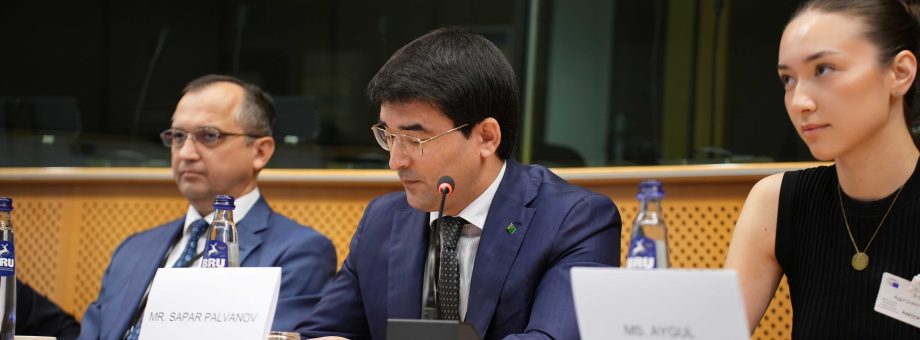
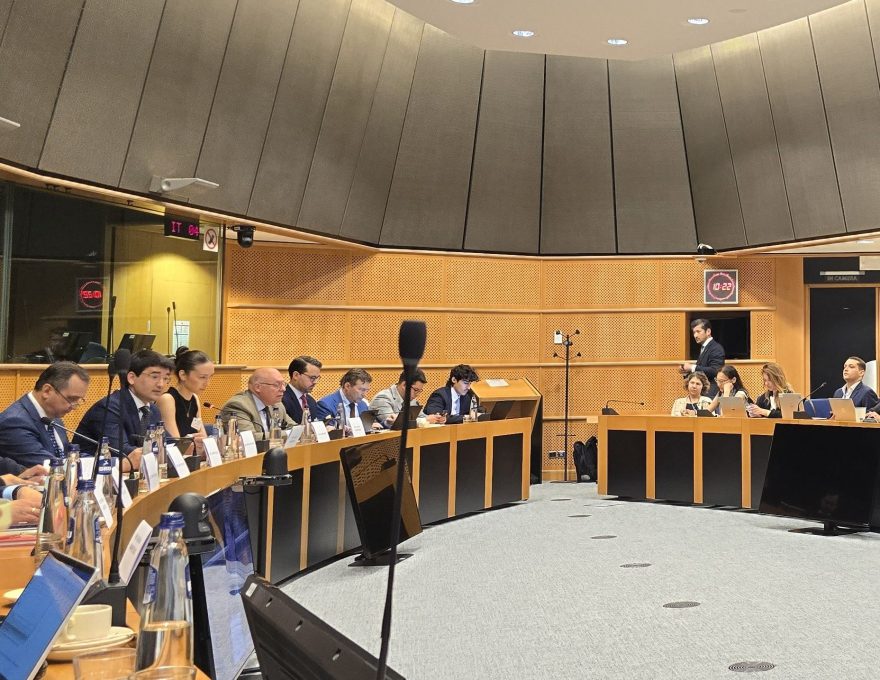
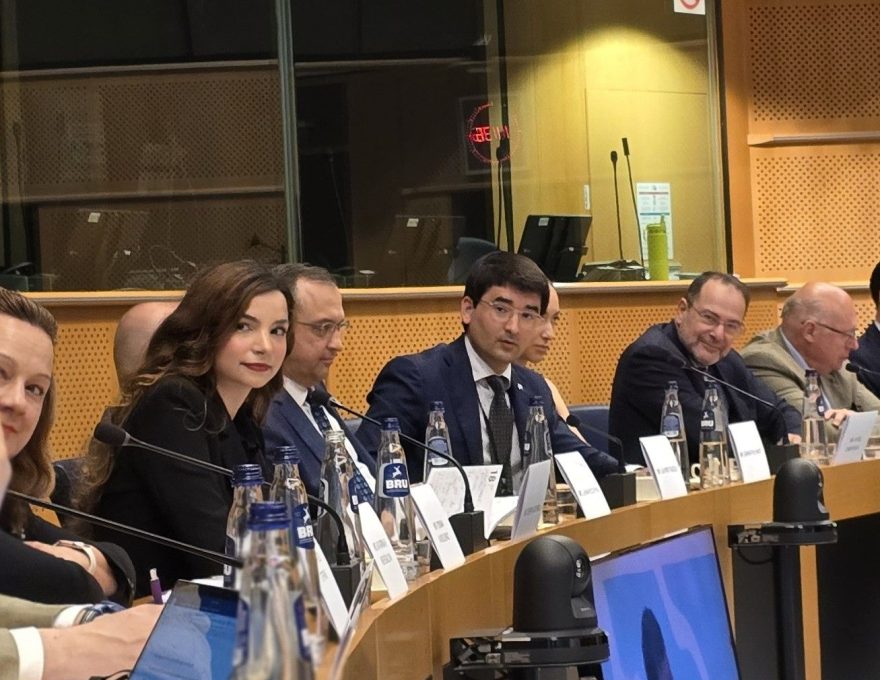
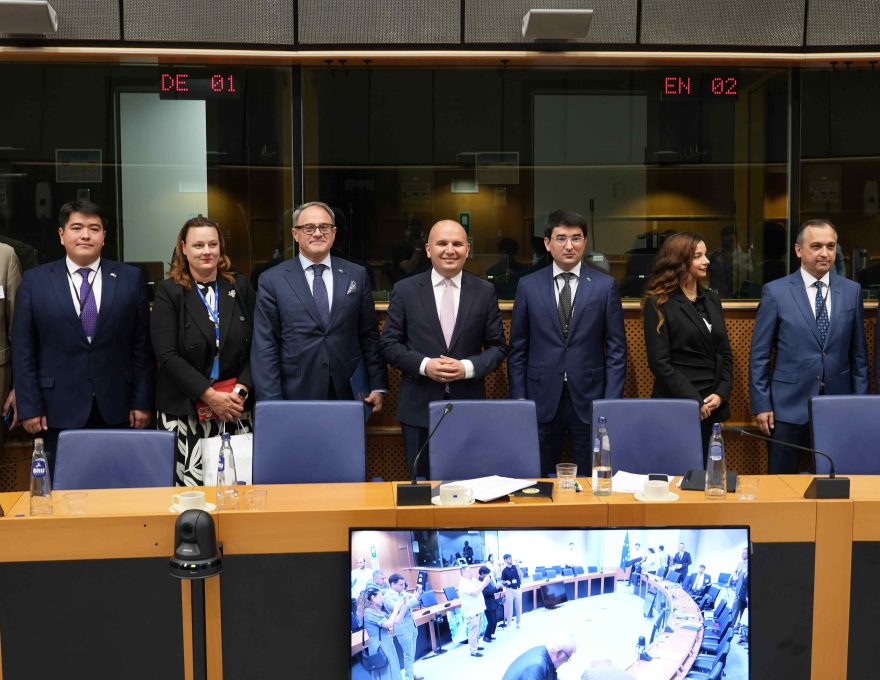
A high-level round table entitled “The Trans-Caspian Corridor as a factor in strengthening the European Union’s strategic autonomy” was held at the European Parliament in Brussels. The event was organised with the support of Member of the European Parliament Ilhan Kyuchyuk.
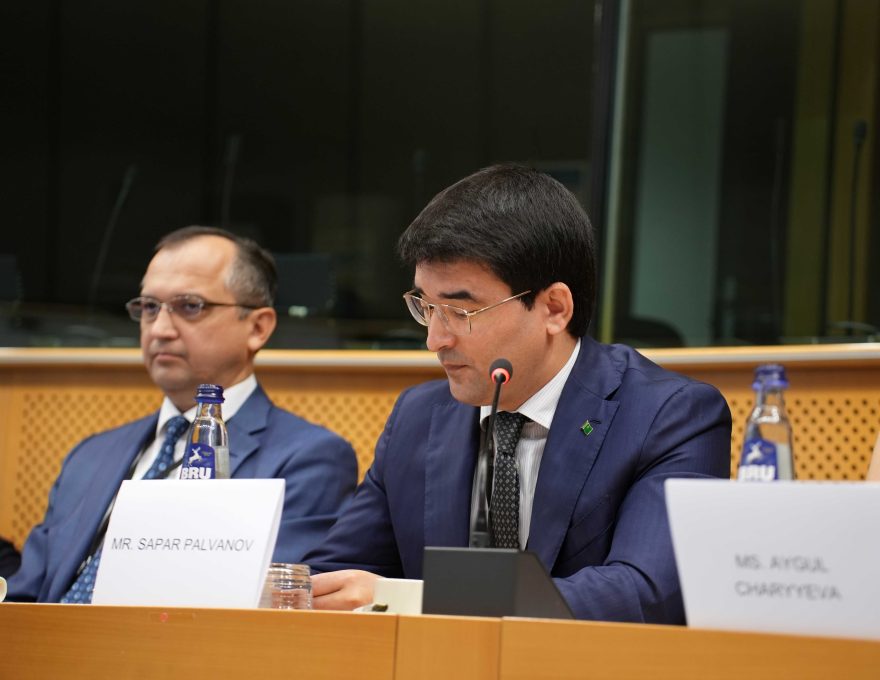
The opening session featured remarks by MEP Ilhan Kyuchyuk, Ambassador of Turkmenistan Sapar Palvanov, Ambassador of Uzbekistan Gayrat Fazilov, and Ambassador of Kazakhstan Roman Vassilenko. The participation of the Ambassadors of Central Asian countries gave the event particular regional significance and underlined the shared interest in developing reliable and sustainable transport links between Central Asia and the European Union.
Sapar Palvanov noted that, in today’s environment, transport connectivity is no longer a purely technical matter. According to him, it is now directly linked to the resilience of supply chains, strategic autonomy, route diversification, and the ability of states to maintain reliable connections in a rapidly changing international environment.
The Ambassador stressed that, for Europe, the Trans-Caspian Transport Route opens an additional and strategically important direction, connecting the European space with Central Asia and the wider Asian region through the South Caucasus and the Caspian Sea.
Palvanov also noted that, for Turkmenistan, the Trans-Caspian direction is a natural and important part of its national transport policy. He emphasised that Turkmenistan’s geographical location creates not only opportunities, but also responsibility: a country located at the crossroads of key transport routes should not be merely a transit territory, but a reliable, predictable and efficient partner.
Special attention in the Ambassador’s remarks was given to the need to view the Trans-Caspian Corridor not simply as a line on the map, but as a comprehensive transport ecosystem. Such an ecosystem includes ports, vessels, railways and roads, customs procedures, digital solutions, logistics operators and the active participation of the private sector.
Participants highly appreciated the growing role of the Trans-Caspian Transport Route in strengthening links between the European Union, Central Asia, the South Caucasus and the wider Eurasian space. It was emphasised that the route is important not only for trade and logistics, but also for the resilience of supply chains, economic connectivity, regional cooperation and the long-term partnership between Europe and Central Asia.
The round table programme included two thematic panels. The first panel was dedicated to “Central Asia and the Trans-Caspian Corridor: An Integrated Connectivity Architecture.” The second panel focused on “From Strategy to Investment: Global Gateway and EU-Central Asia Partnership.” Both panels were moderated by Ms. Derya Soysal, an expert on Central Asia and PhD candidate at Tashkent State University of Oriental Studies.
During the discussions, participants noted the consistent efforts of Central Asian countries to develop transport infrastructure, digitalise procedures, strengthen regional coordination and advance practical projects within the Trans-Caspian direction. It was particularly underlined that no single country can build a competitive corridor alone: a route becomes strong only when all its sections operate in a coordinated, predictable and efficient manner.
At the conclusion of the event, participants emphasised the importance of further cooperation between the European Union, the countries of Central Asia, the South Caucasus, international financial institutions and the private sector. Participants agreed that the further development of the Trans-Caspian Transport Route should be based on concrete projects, investments, digital solutions and practical coordination among all countries and partners along the route.