
 NEWS
NEWS
Ambassador of Turkmenistan met with the Head of Cabinet of the EU HRVP
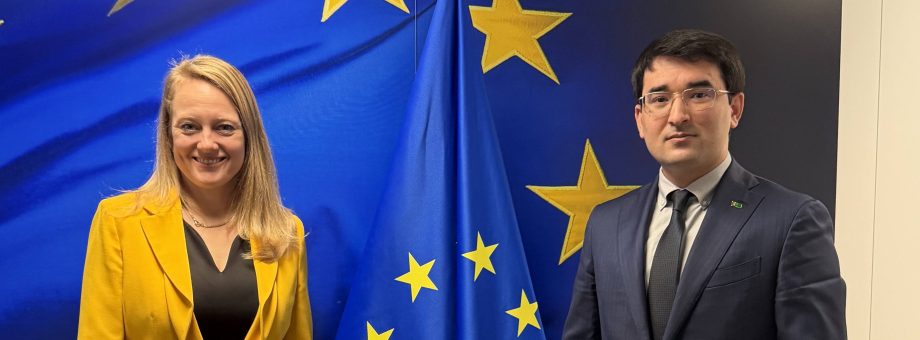
In Brussels, Ambassador of Turkmenistan Sapar Palvanov held a meeting with Ms. Vivian Loonela, Head of Cabinet of the High Representative of the European Union for Foreign Affairs and Security Policy / Vice-President of the European Commission (HR/VP) Ms. Kaja Kallas.
The discussion focused on practical aspects of cooperation between Turkmenistan and the European Union, as well as on shaping a substantive agenda for potential high-level contacts. The parties noted that the elevation of EU–Central Asia relations to a strategic level has created new conditions for strengthening bilateral engagement.
The sides positively assessed the outcomes of the 20th anniversary EU–Central Asia Ministerial Meeting held in Turkmenistan with the participation of the EU High Representative and underlined the importance of continuing this dialogue in Brussels. It was emphasized that the current stage of interregional cooperation naturally calls for a stronger bilateral track between Turkmenistan and the European Union.
Particular attention was given to Turkmenistan’s practical support in facilitating the evacuation of EU citizens from Iran through its territory. The EU side highly appreciated this contribution, highlighting Turkmenistan’s reliability as a partner in humanitarian situations.
During the meeting, the Ambassador conveyed that the European Union is among the key foreign policy priorities of Turkmenistan for 2026. In this context, he emphasized the importance of updating and deepening the format of cooperation, moving towards more structured and results-oriented engagement.
Special focus was placed on the development of a stronger legal framework for cooperation. The Ambassador confirmed Turkmenistan’s intention to advance an updated Partnership and Cooperation Agreement (PCA), in particular, to initiate the process towards a potential Enhanced Partnership and Cooperation Agreement (EPCA), aimed at giving bilateral relations a more systematic and sustainable foundation.
The parties agreed that the priority areas identified at the interregional level are equally relevant for bilateral cooperation. These include energy, including green energy, transport and connectivity, critical raw materials, research and innovation cooperation, and climate issues.
As a next step, the importance of creating an effective platform for direct interaction between relevant institutions and agencies of both sides was highlighted, to translate political dialogue into practical cooperation.