 NEWS
NEWS
Meeting between the Ambassador of Turkmenistan and the Deputy Director-General of The DG EAC
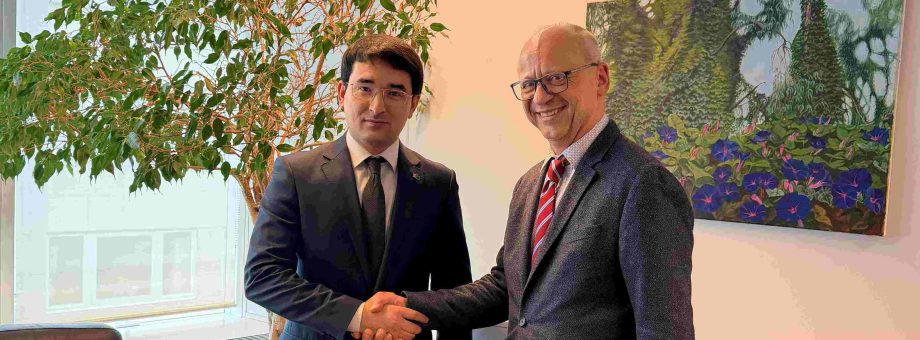
Ambassador of Turkmenistan S. Palvanov met with Mr. Normunds Popens, Deputy Director-General of the European Commission’s Directorate-General for Education, Youth, Sport and Culture (DG EAC).
During the substantive exchange, the parties discussed prospects for deepening cooperation between Turkmenistan and the European Union in the fields of education, youth policy and cultural engagement. It was emphasized that the elevation of EU–Central Asia relations to a strategic level creates additional opportunities for strengthening full-fledged bilateral cooperation between Turkmenistan and the European Union.
The Ambassador underlined that human capital development is one of the key priorities of Turkmenistan’s state policy. The country is implementing a gradual and consistent modernization of its education system. Following an initial period of consolidating and adapting the inherited Soviet educational framework into a national model, Turkmenistan has entered a new phase focused on aligning its system with modern international standards.
In recent years, a multi-level higher education structure based on bachelor’s and master’s degrees has been introduced in a number of institutions as a pilot initiative. This reform represents an important step toward integration into the global academic space.
It was noted that the Ministry of Education of Turkmenistan demonstrates growing interest in European approaches, particularly in areas such as quality assurance mechanisms, academic mobility, credit transfer systems, digitalization of education and modern university governance models. Turkmen higher education institutions are already cooperating with universities in several EU Member States, contributing to curriculum modernization, the introduction of innovative teaching methodologies and the strengthening of research capacity.
The sides exchanged views on expanding the participation of Turkmen universities and youth organizations in EU-supported programmes, including academic exchanges, joint educational initiatives and cooperation in training specialists in high technologies, digital transformation and the green transition.
Particular attention was given to youth policy. The importance of strengthening contacts between youth organizations, implementing leadership and skills development programmes, enhancing digital and entrepreneurial competencies, and sharing experience in youth employment strategies was highlighted.
The meeting also addressed prospects for further expanding cultural cooperation, including joint exhibitions, partnerships between museums and cultural institutions, and initiatives aimed at fostering humanitarian dialogue and mutual understanding.
Both sides confirmed their mutual interest in further institutional development of cooperation, including the possible elaboration of framework arrangements and the establishment of sustainable coordination mechanisms between relevant institutions.
At the conclusion of the meeting, the parties reaffirmed their readiness to continue a structured and forward-looking dialogue with a view to implementing concrete joint initiatives in the areas of education, youth and culture.